Common fault
Why is my oven not heating properly?
Short answer
Most ovens that stopped working are still working. They are heating faithfully to the wrong temperature, because the sensor has drifted with age and the control believes it.
Why we start there
That shows up as uneven browning or a roast that suddenly needs an extra half hour, and it is a calibration fault rather than a dying range. An oven producing no heat at all is a different and often cheaper problem: on gas, a glow-bar igniter that still lights up but no longer draws enough current to open the gas valve; on electric, the bake element or its relay.
What happens next
The equipment mix in La Jolla kitchens means we see this on Wolf, Viking and Thermador ranges as often as on anything else, and the brand shapes the diagnosis. On Wolf and Viking the recurring cause is sensor drift and igniter wear, and the glow-bar failure mode is worth recognizing: the igniter still glows visibly, so it looks fine, but the current it draws has fallen below the level that opens the gas safety valve. The oven takes longer and longer to light, then one day does not. On Thermador the display usually has an opinion and names a component, and that opinion is a starting point rather than an answer. A sensor reporting a strange value is frequently reporting a real condition somewhere else, and replacing the board the display blames is the most expensive way to change nothing.
There is a specific fault worth knowing about in the older houses around the Village and Lower Hermosa, where a professional range has been retrofitted into a kitchen that was built long before that equipment existed. Ventilation and gas supply were often sized for what was there before. A range that heats slowly, browns unevenly across the cavity or struggles at high setpoints is sometimes not faulty at all, it is starved, and no amount of parts will fix a supply problem. We check that before we start replacing components, and if the answer is upstream of the appliance we will say so plainly rather than sell you an igniter.
If that matches what yours is doing, say so when you call — it decides which parts come on the van.
Reviews
Water was tracking out from under the built-in onto original wood floors and I assumed a line had split. It was the defrost drain iced closed. He cleared it, dried underneath and had a proper look at the boards before he left so I knew where I stood. Came out that day.
- ★★★★★
A whir behind the bottom grille that was not there last year, and up on our side of the hill it got louder through the afternoon when the kitchen heats up. Condenser fan bearing on the way out, so he changed the motor before it seized. Glad I called about a noise.
- ★★★★★
Our Sub-Zero freezer went out on a Sunday. They answered immediately and had a technician at our home in Bird Rock within two hours. Incredibly professional and fast service!
Appliance down in La Jolla?
Tell us the brand and what it is doing — we can usually name the likely repair before we arrive.
Questions
Frequently asked questions
Do you have to pull the unit out of a La Jolla kitchen to work on it?
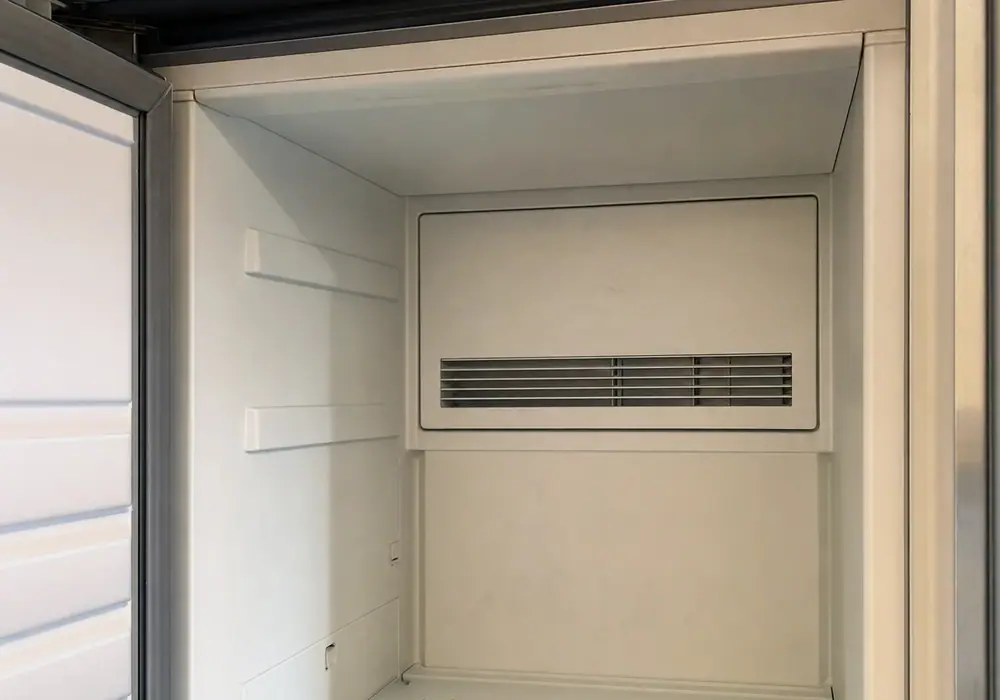
Almost never. Sub-Zero built-ins are serviced where they stand: condenser and fan behind the lower grille, evaporator behind a rear panel in the compartment. These kitchens are finished around the appliance — stone countertops clearing by a fraction of an inch, original wood floors in the older Village and Lower Hermosa houses. Sliding a loaded built-in across those does more damage than the fault.